


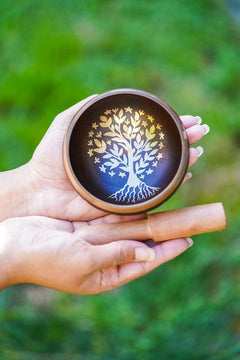

Singing bowls have grown in popularity in recent years as people seek for new and interesting ways to incorporate mindfulness and meditation into their daily lives. When the singing bowl is played it generates a unique and calming sound which helps us to calm our mind and promote a sense of inner peace in our body. The Singing bowls are usually crafted from a variety of metals and can be also designed in various sizes as per required.
But here is the question:
Why do people put water in a singing bowl?
One of the most common reasons people put water in their singing bowl is to enhance the sound quality. When you add water in the singing bowl, it changes the pitch and resonance of the sound produced creating a richer and more complex tone which is more pleasing to the ear and can deepen the experience of listening or playing the bowl. This can be particularly helpful if you're using your singing bowl for meditation or relaxation purposes as the soothing sound can help to calm your mind and promote relaxation into your body.
Another reason is spiritual. In many traditions water symbolises purification and renewal, so some people add water to the bowl as part of a cleansing ritual. Watching the water ripple and dance as the bowl sings can also be a beautiful focus for meditation. For some practitioners, the water is also a symbol of intention or blessing being carried into the space.

It's important to note that while adding water can be a great way to enhance your singing bowl experience, it's not necessary for everyone. Some people prefer the sound of a dry bowl, while others may find that adding water detracts from the overall quality of the sound. Ultimately, the decision to add water or not should be based on your own personal preferences and the intended use of your singing bowl.
In conclusion:
From a spiritual perspective, water is often seen as a symbol of purification and renewal, and can be used to help cleanse and purify the mind, body, and spirit. Overall, adding water is a simple way to explore new sounds and to bring a sense of ritual to your practice.
Leave a comment