


Tingsha Bells: Everything You Need to Know
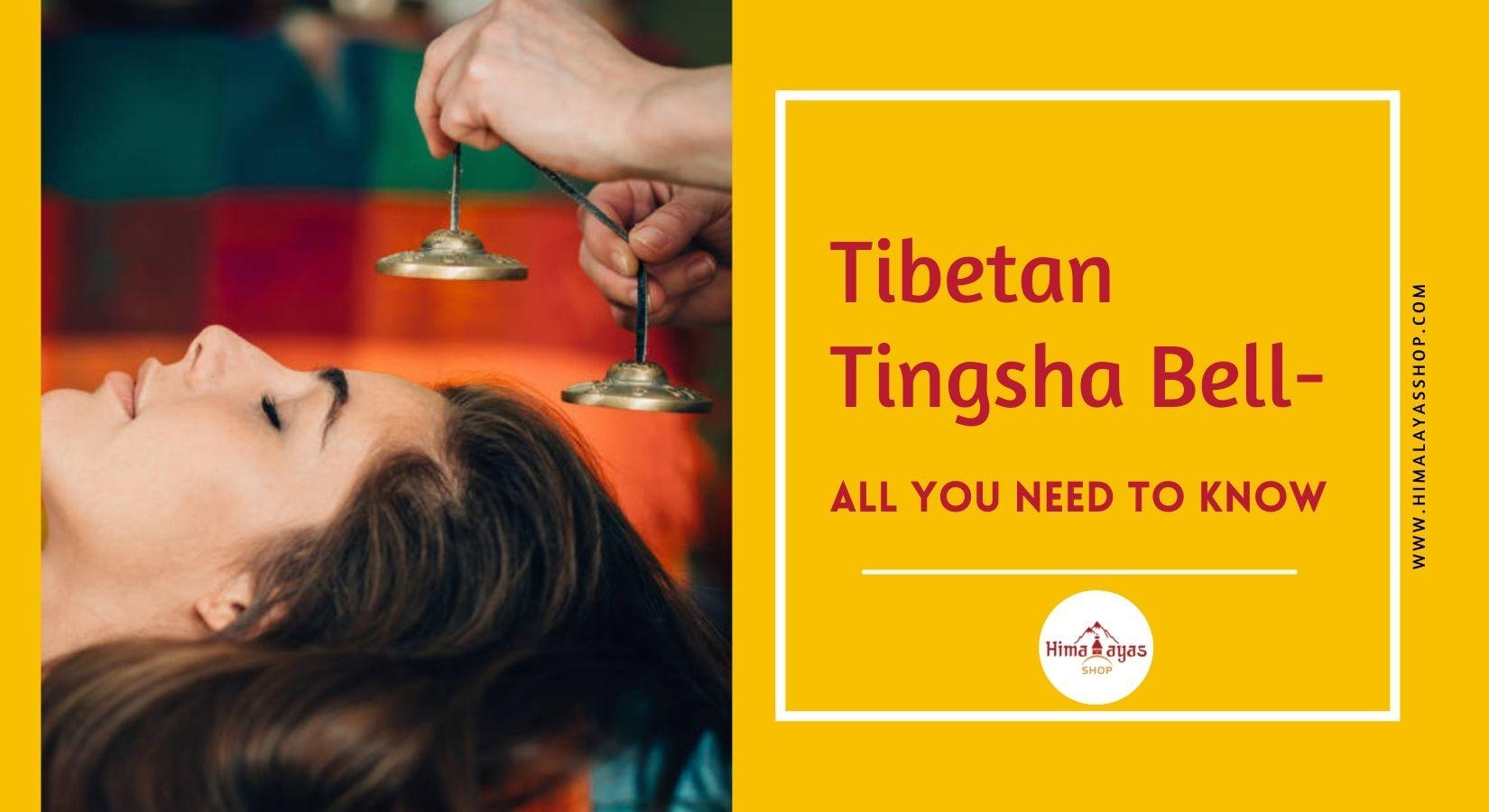
A tingsha is a pair of small, thick Tibetan cymbals joined by a cord. You hold the cord so the two cymbals hang, then touch their edges together to make a clear, high ring that lasts for many seconds. Tibetan Buddhists use them in prayer and offering rituals, and today they are also common in meditation, yoga and sound practice. This guide covers how they are made, how they sound, how to play them and what their designs mean.
What a tingsha is
The Tibetan name is written ting-shags, usually spelled tingsha or ting-sha in English. In shops you will also see them called Tibetan cymbals, Tibetan chimes or meditation bells. They are two small cymbals, each with a raised dome in the centre, joined through the domes by a leather strap, a cord or sometimes a chain.
Unlike the thin cymbals of a drum kit, tingsha are heavy and thick for their size. That thickness is what gives them a long, clean ring instead of a short crash.

Size
Most pairs measure about 6 to 10 cm (2.5 to 4 inches) across. A museum example at the Bowers Museum measures 8.3 cm per cymbal.
Metal
Usually cast bronze or brass and finished by hand. Some older pieces in museum collections are catalogued as copper.
The cord
Traditionally leather. Modern pairs often use braided cotton cord; a few use a chain. The cord changes the feel in the hand more than the sound.
Often played with
Singing bowls, hand drums and the vajra and bell. In meditation the tingsha usually marks a moment, and the bowl carries a longer sound.
You may read that tingsha are made from seven metals, each linked to a planet and a day of the week. This is a popular story told about Himalayan bells and bowls, and it is hard to verify for any given piece. Antique tingsha are generally made of bronze alloys, which give them their long, rich overtones. Most tingsha today are a bronze or brass alloy, and the sound depends far more on the casting, thickness and finishing than on a list of metals.
How a tingsha sounds
When the edges meet, both cymbals ring at once. The tone is high, bright and focused, and on a good pair it fades slowly over many seconds. Many people describe it as cutting cleanly through a room, which is why it works well as a signal.
Small tingsha sound in a high range. We measured the recorded sound sample of our plain 8 cm pair: its strongest tone sits at about 2,500 Hz, with a cluster of tones a little above that and a fainter set near 5,800 Hz. For comparison, the highest note on a standard piano is about 4,186 Hz. Other pairs will measure differently.
Larger and thicker
A lower, fuller tone that rings for longer.
Smaller and lighter
A higher, thinner and very pure tone that fades sooner.
Matched or unmatched
If the two cymbals sound slightly different pitches, you hear a gentle pulse in the ring. A closely matched pair gives a steadier tone.
Why the two cymbals should agree
The Bowers Museum notes that well-made pairs are shaped so precisely that both cymbals sound the same pitch. When you listen to a pair before buying, check that the ring is clear and steady and does not rattle or buzz.
Tingsha in Tibetan practice
In Tibetan Buddhism, tingsha are ritual instruments used in prayer, offering and personal meditation. Three uses are well documented:
Sur offering
In the sur (smoke) offering, a mixture of flour, sweets and dairy foods is burned and the fragrant smoke is offered. Tingsha may be struck to call beings, especially hungry ghosts, to share in it. The practice is understood as an act of generosity and compassion towards beings who are said to suffer from constant hunger.
Offering of sound
The Bowers Museum describes the sound of tingsha as regarded as an offering symbolising the five senses, and notes that practitioners believe the sound summons spirits.
Marking meditation
Tingsha are struck to mark the beginning and end of a period of meditation or prayer. This is one of their most familiar uses.
What is belief and what is measured
Calling hungry ghosts, clearing energy and purifying a space describe what practitioners believe and do. They are part of a religious and cultural tradition, and they are not effects that science has measured. You can respect the tradition and use tingsha for simple listening and focus without taking on every belief attached to them.
The hungry ghosts belong to one of the six realms of rebirth described in Buddhist teaching. Our guide to the wheel of life in Buddhism explains the six realms in more detail.
How people use them today
Outside the monastery, tingsha have become a common tool in meditation groups, yoga classes and sound sessions. Their main job is the same everywhere: one clear sound that tells people to stop, listen and notice where their attention is.

Meditation sessions
One ring to begin, one to end. Some teachers ask the group to follow the sound until it fades completely, which is a simple way to settle attention.
Yoga classes
A ring can help students settle on their mats, or pace the breath: inhale on one ring, exhale on the next.
Sound sessions
Used alongside singing bowls and gongs, often at the start and close of a session, or as a bright contrast to deeper tones.
Space clearing and feng shui
Some people ring tingsha in each corner of a room, or move them around the room, to clear what they describe as stagnant energy. This is a modern practice built on belief.
For more on that last practice, see how tingsha cymbals are used to clear negative energy.
Two simple listening practices
Many people like to pair the sound with a short visualisation. These are modern exercises, not traditional Tibetan rites.
- Tuning. Close your eyes and picture a column of light running through the centre of your body and up above your head. Picture a dial for the feeling you would like to move towards, and turn it as you ring the tingsha. Stay with that quality until the sound fades.
- From head to heart. If you feel stuck in your head after hours at a screen, close your eyes and imagine riding a lift slowly downwards, from your head to your throat and then to your heart. Ring the tingsha when you arrive at the heart, listen to the ring until it ends, open your eyes and take a deep breath.
How to play tingsha
- Hold the cord in the middle with one hand in each half, so each cymbal hangs freely a few centimetres below your fingers.
- Turn the cymbals edge on. Tilt them so the rims face each other, not the flat faces. Flat faces meeting give a dull clack.
- Bring the edges together lightly. Let them touch and part in one easy movement. A gentle strike gives the clearest ring; a hard clash adds harsh overtones.
- Let them hang and ring. Keep your fingers off the metal and listen until the sound has completely gone.
- To stop the sound, touch the rims with your fingertips.
There is more than one way to hold them, and each changes the sound a little.
Tap a playing style
The usual way. Both cymbals swing freely, so the ring is long and open. Hold the cord a few centimetres above the domes for the most control.
Useful for marking the start and end of meditation.
Pinch the cord right where it meets each dome and strike slowly. The cymbals cannot swing, so the strike is more precise and quieter. Give your full attention to the sound and listen to it until the end.
Suits slow, attentive listening and small rooms.
Strike once, then let the ringing pair move slowly around you or through a room. The sound seems to rise and fall as the cymbals turn. People who use tingsha for space clearing often play this way.
Often chosen for space clearing and sound sessions.
If you also play a singing bowl, our guide on how to play a singing bowl covers striking and rimming technique.
Designs and symbols
Tingsha are made plain or decorated. Decoration is cast or engraved around the dome and on the face, and it changes the look more than the sound. Each design below has a short video of a pair we sell, so you can hear it before you choose.
Tap a design, then press play

Plain tingsha
Smooth faces with only a turned ring or two around the dome. This is the classic form, and many traditional tingsha are plain, so the attention goes to the sound. Plain pairs come in a natural metal finish and a dark, almost black finish.
Listen to both finishes below.
Natural finish · view the pair
Black finish · view the pair
Why choose a plain pair
With no decoration to look at, a plain pair is the simplest way to judge a tingsha by sound alone. Listen for a clear, even ring that fades slowly, with no rattle or buzz. Plain pairs suit anyone who wants the sound for meditation or as a signal, without a particular mantra or symbol.

Mantra tingsha
Raised syllables of a mantra run around the face, most often Om Mani Padme Hum, the six-syllable mantra of Avalokiteshvara (Chenrezig), the bodhisattva of compassion. What each syllable means is explained below the video.
See our mantra tingsha.
What the six syllables mean
On the cymbal the mantra is written in Tibetan script, ཨོཾ་མ་ཎི་པདྨེ་ཧཱུྃ, read left to right around the face. Tibetan teachers explain the mantra in several ways, and the readings sit side by side rather than competing. The table shows two published explanations: Dilgo Khyentse Rinpoche links each syllable to one of the six perfections, and Thinley Norbu Rinpoche links each to one of the six realms and the affliction that leads there.
| Tibetan | Syllable | Perfection (Dilgo Khyentse) | Realm and affliction (Thinley Norbu) |
|---|---|---|---|
| ཨོཾ | Om | Generosity | Gods; pride |
| མ | Ma | Ethics | Jealous gods (asuras); jealousy |
| ཎི | Ni | Patience | Humans; desire |
| པད | Pad (Pe) | Diligence | Animals; ignorance |
| མེ | Me | Concentration | Hungry ghosts; greed |
| ཧཱུྃ | Hum (Hung) | Wisdom | Hell realms; anger and hatred |
The Dalai Lama gives a third reading: Om stands for the practitioner's body, speech and mind; Mani, the jewel, for compassion and the wish to help others; Padme, the lotus, for wisdom; and Hum for the union of compassion and wisdom. Read more in our guide to Om Mani Padme Hum.

Eight auspicious symbols
The eight auspicious symbols (ashtamangala in Sanskrit) are arranged around the dome. They are among the most widely used signs in Tibetan art. Their meanings are explained below the video.
See our Asthamangal Tibetan tingsha.
What the eight symbols mean

Interpretations differ between sources and between Hindu, Jain and Buddhist traditions, which each have their own set. These are the common Tibetan Buddhist readings.
| Symbol | Common meaning in Tibetan Buddhism |
|---|---|
| Parasol | Protection. Once a sign of royalty, it stands for the protection the Dharma gives from harm and confusion. |
| Two golden fish | Good fortune, and moving freely and without fear through the ocean of suffering. They were originally linked to the Ganges and Yamuna rivers. |
| Treasure vase | Abundance, both material and spiritual: a vessel for wisdom and compassion. |
| Lotus | Purity of body, speech and mind. The lotus grows from mud but blooms clean. |
| Conch shell | The sound of the Buddha's teaching spreading far, waking beings from ignorance. |
| Endless knot | Interdependence of all things, and the endless wisdom and compassion of the Buddha. |
| Victory banner | The Buddha's victory over Mara and ignorance. |
| Dharma wheel | The Buddha's teaching; its eight spokes are often read as the Noble Eightfold Path. |

Moon tingsha
A carved lotus sits on each dome, with a mantra around the face and another on the back, so a Moon pair combines the lotus symbol with two mantras. The carvings are listed below the video.
See our Moon tingsha, an 8 cm pair.
What is carved on a Moon tingsha
| Where | Carving | Common meaning |
|---|---|---|
| Dome | Lotus petals | Purity; the lotus grows from mud but blooms clean |
| Front face | Om Mani Padme Hum ཨོཾ་མ་ཎི་པདྨེ་ཧཱུྃ |
The mantra of compassion (see the Mantra tab) |
| Back face | Om Ah Hum ཨོཾ་ཨཱཿ་ཧཱུྃ |
The purified body, speech and mind |
How to choose a pair
Choose by sound first, then by size and design.
Listen before you buy
A recording tells you more than a photo. Listen for a clean, steady ring with no rattle, and for how long it lasts.
Pick a size for the room
Around 7 to 8 cm suits most people and most rooms. Go larger if you want a lower tone that carries in a big hall.
Feel the weight
Thick, heavy cymbals ring longer. Very light pairs often sound thin and short.
Choose a design you will enjoy
Decoration matters far less to the sound than size and thickness, so pick the one whose meaning or look you like.
Keep them apart when stored
Knocks against hard surfaces can dent a rim and change the sound. Store tingsha in a soft pouch or case, and wipe them with a dry cloth after handling.
You can compare the pairs we carry, each with a sound recording, in our tingsha collection.
Frequently asked questions
What are tingsha bells used for?
In Tibetan Buddhism, tingsha are used in prayer and offering rituals, including the sur offering to hungry ghosts, and to mark the start and end of meditation. Today they are also used in yoga classes, sound sessions and space clearing, mainly as a clear signal to pause and listen.
How do you play tingsha cymbals?
Hold the cord in the middle so both cymbals hang freely, tilt them so the rims face each other, and touch the edges together lightly. Let them hang and ring until the sound fades. Striking the flat faces together gives a dull clack instead of a ring.
What frequency is a tingsha?
Small tingsha ring in a high range. The recorded sample of one plain 8 cm pair we sell has its strongest tone at about 2,500 Hz. Larger and thicker pairs sound lower, and every handmade pair measures a little differently.
Are tingsha the same as Tibetan bells?
Not quite. Tingsha are a pair of small cymbals struck together. The Tibetan bell (drilbu) is a hand bell with a clapper, usually used with a vajra. Both are Tibetan ritual instruments, and both are sometimes loosely called meditation bells.
What is written on tingsha cymbals?
Decorated tingsha usually carry the mantra Om Mani Padme Hum, the eight auspicious symbols, or other Tibetan motifs such as dragons or lotuses. Plain tingsha have no writing at all.
Do tingsha clear negative energy?
Many people use tingsha for space clearing and believe the sound clears stagnant energy. This is a spiritual belief and practice, not a measured effect. What most people notice is that the sharp, clear ring makes them stop and pay attention.
What size tingsha should I buy?
Pairs of about 7 to 8 cm suit most home and class use. Larger pairs give a lower, longer tone; smaller ones sound higher and fade sooner. Listening to a recording of the actual pair is the best guide.

Tingsha Bell from Himalayas
Sale
Size: 8 cm
A plain pair of heavy 8 cm tingsha on a braided cord, with no engraving. Play the recording to hear this pair.
★★★★★"Love the deep sound. Great quality! Currently using when I teach my restorative yoga classes."
Deirdre K., customer review
Sources
- Bowers Museum, Prayer Cymbals (Ting-shags), 20th century, Tibet. collections.bowers.org
- Wikipedia, "Tingsha". en.wikipedia.org/wiki/Tingsha
- Wikipedia, "Sur offering". en.wikipedia.org/wiki/Sur_offering
- College of the Holy Cross, Himalayan Cultures project, "Buddhist Ritual Instruments". college.holycross.edu
- The Dalai Lama, "The Mantra Om Mani Padme Hum", Buddhism Now. buddhismnow.com
- Thinley Norbu Rinpoche, "Om Mani Padme Hung: An Explanation of the Six-Syllable Mantra", Shambhala Publications. shambhala.com
- Wikipedia, "Om mani padme hum" (for Dilgo Khyentse Rinpoche's six perfections reading). en.wikipedia.org/wiki/Mani_mantra
- Manitoba Education, "Buddhist Symbols" (eight auspicious symbols). edu.gov.mb.ca
Written as an educational guide for Himalayas Shop. Ritual uses follow Tibetan Buddhist practice as described in the sources above; readings of the mantra and symbols vary between teachers and traditions. Wellbeing and energy-clearing uses describe belief and practice, not proven effects, and tingsha are not a substitute for medical or mental health care.
3 comments
Thank you so much for this information. I smiled when I read “i.e. hand craving, itching, and engraving” above. :)
Thanks for the message @Roger East. You could download any tuner app to your phone. We use n-track tune or Carl Tuner to check these notes and frequency.
I am looking for a particular frequency of cymbal that matches the pair that I already have. How do I determine what the frequency is?
Leave a comment